Don't Go Long From the Fairest Price — AM Briefing #841
AM BRIEFING
ES CHART | KEY LEVELS | SETUPS
ES Technical Analysis — AM Briefing 841 Timeline
Wednesday August 26, 2026
| TIME | CHAPTER |
|---|---|
| 0:00 | Welcome ES MES Futures Traders |
| 0:18 | Briefing #841 Kicks Off George opens AM Briefing number 841 and reminds you to mind your leverage on a slow tape. |
| 0:40 | This Week's Catalysts PCE lands at the bottom of the hour today, the Fed's top inflation gauge. A Warsh speech looms Friday. |
| 1:00 | Trade Review: Monday & Overnight Recapping the week's entries off the strong levels. Monday and overnight both played out beautifully. |
| 1:31 | The Week's Most Important Levels George explains why he builds his strong levels into an indicator to keep the key price action on the chart. |
| 1:53 | Yesterday's Live Long to Target The purple-box long from the bottom pushed to target. Ugly, but it got there by the close. |
| 2:24 | Why You Hold a Lotto Runner Lots of back and forth, and the runner still reached the opening price before the day ended. |
| 2:53 | Ping Ponging the Strong Range Price rotates the same spots: opening, top of the strong range, bottom, back again. Clean levels make reading easier. |
| 3:18 | Value Area Low Bounce Yesterday's bounce came off the value area low through the tariff headlines, right at the three marked levels. |
| 3:49 | Stopped Out of the Long George was long at 76 and got shaken out just before price went a bit further. He owns the miss. |
| 4:26 | Where the Ideal Stop Lives On a bigger trade he keeps the stop under the strong range and lets the level defend price. |
| 4:55 | Flat and Not Chasing Highs He goes into today flat, not enthused about longing right up here without a pullback or a tight-stop breakout. |
| 5:18 | Minutes to Core PCE Six points, six minutes. Everything is measured in points when you trade. |
| 5:35 | Essentials Indicator Updated Version 6.5 adds more watch-list slots. Update it when you get the chance. |
| 6:16 | Battle Plan 3 Breakdown BP3 paid every day this week. Continuation long, use the strong range, and treat the entry lightly. |
| 6:44 | RTH High as a Magnet Yesterday's RTH high is an obvious draw, with the New York high as a further target overhead. |
| 7:22 | Reading the Volume Profile George pulls the profile to locate the POC inside the four-day mess. |
| 7:57 | The POC's Gravitational Pull Price sits right on the POC, the fairest price. Going long from there means predicting a breakout. |
| 9:06 | Four Inside Days of Compression Two minutes to PCE. Four days in a row still living inside the same range, bottling energy. |
| 9:59 | The 7728 Level A first push into the 7728 area likely fails to break clean and rotates back in before any real move. |
| 10:37 | Countdown and Engagement Seconds to news. George asks for a like and a share to grow the channel. |
| 11:16 | Fifteen Minutes to the Open PCE prints just before the bell. The tape feels like it wants to go up, just looking for a reason. |
| 12:01 | News Reaction, Range Defended Price pushes down, the bottom of the range defends, and the RTH high stays untaken. |
| 12:32 | POC Recap and Wrap Still hard to long from the POC. Treat BP3 as an add-on. See you live in fifteen minutes. |
MES MICROS TRADE PLAN
Don't Go Long From the Fairest Price… POC and the Four-Day Squeeze
Posted: Wednesday August 26, 2026

This was a PCE morning with the tape bottled up tight. Four days in a row, price is still living inside the same range, ping ponging between the strong levels. The heart of this ES futures morning briefing is one hard idea: when price sits right on the POC, the fairest price on the chart, going long is really difficult… because you are basically predicting a breakout. George stayed FLAT into the number, kept Battle Plan 3️⃣ light, and let the four-day compression build energy for the move that actually pays. Discipline over action on a slow tape.
THE FOUR-DAY SQUEEZE: WHY THE TAPE WON'T MOVE
Be honest with yourself about where you are. Four days in a row and the market is still living inside the same day's range. Slop and chop. We are just waiting for news.
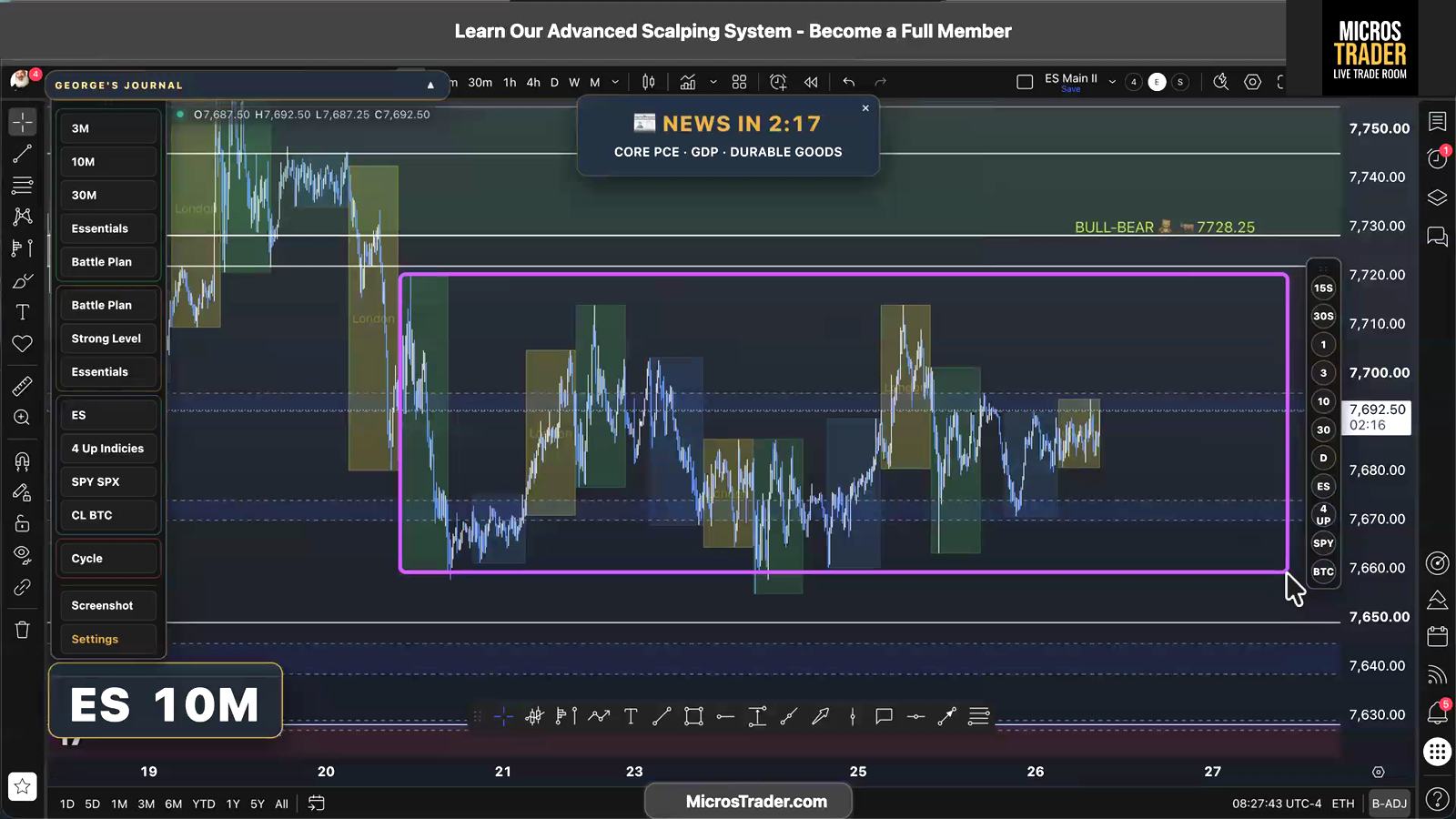
That is not a complaint… it is a read. Energy is bottling up. The tape ping pongs the same spots over and over: back to the opening to perfection, up to the top of the strong range, down to the bottom of the strong range, back to the opening. When the levels are this clean, the reading gets easier.
Trader Lesson 1
When price coils inside the same range for days, stop demanding a move. Compression bottles energy… your job is to mark the edges and wait for the break, not to force a trade in the muddy middle.
THE POC HAS A GRAVITATIONAL PULL
Here is the core read of the day. Price sat right on the Point of Control, the POC, the highest-volume node in this whole mess. And from right on top of it, it is hard to want to go long.
Why? Because the POC is the fairest price. It has a gravitational pull… price wants to come back to it. To go long from there is really difficult, because you are essentially predicting a breakout instead of trading a location where the odds favor you.
- POC (Point of Control): the price level with the highest traded volume in a session or profile. It acts like a magnet.
- The trap: buying at the fairest price gives you no edge. You need price to leave the node and keep going, which is a breakout bet, not a location trade.
- The fix: want your longs from the edges, from a defended level, not from the middle where everyone agrees on value.
Trader Lesson 2
Don't go long from the POC. The fairest price has a gravitational pull, so buying there means predicting a breakout… take your entries from the edges of value, not the middle.
BATTLE PLAN 3️⃣: TREAT THE ENTRY LIGHTLY
Battle Plan 3️⃣ has paid every single day this week. Today's note keeps it honest: continuation long, use the strong range to help with entry… and treat this entry lightly.
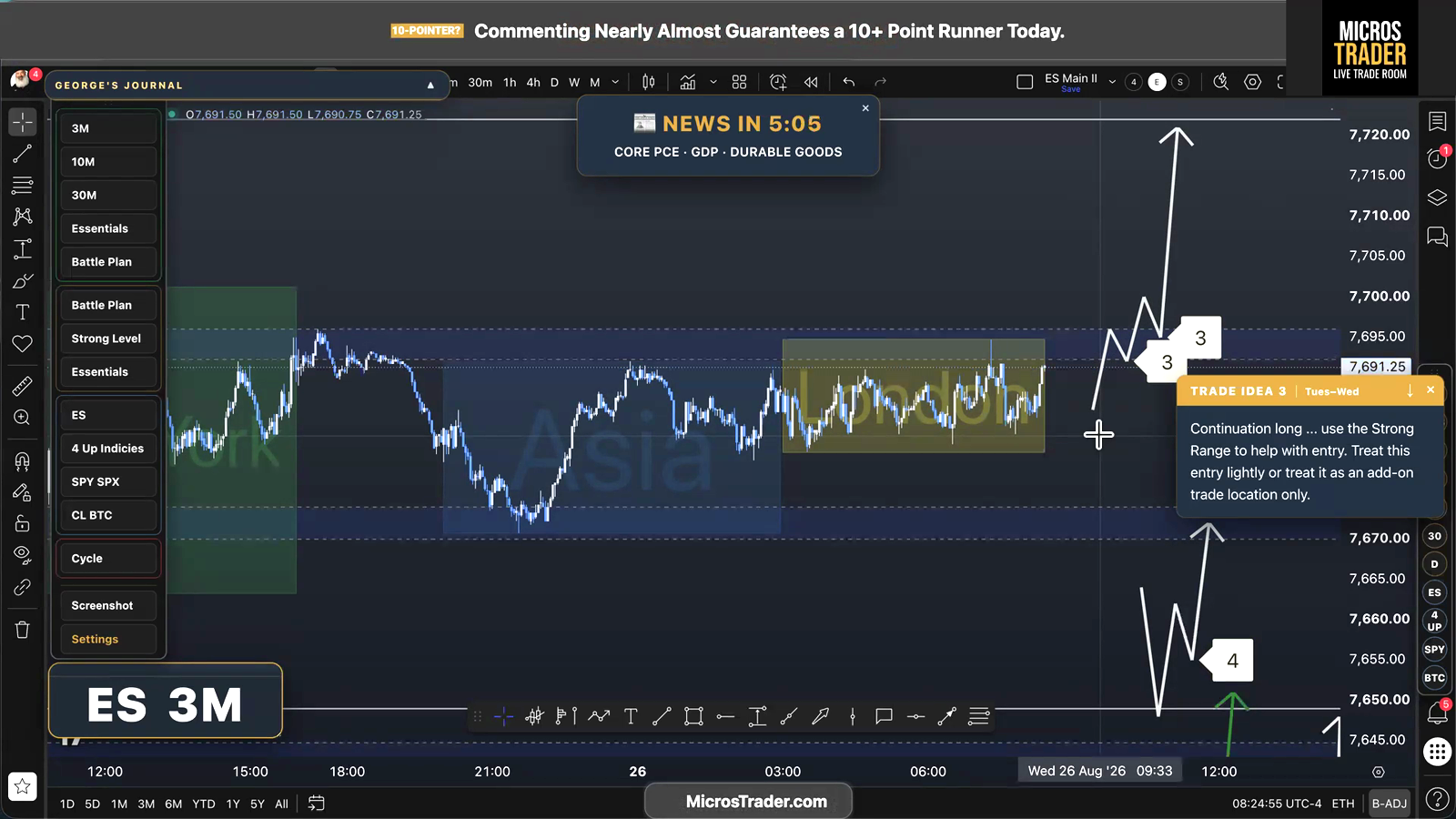
George was clear on what that means. This is an add-on trade location, not an initial entry. He would much prefer it as a place to add to a winner than as the spot where you first commit. That does not mean it is not a legit trade. It means you do not load up.
- Continuation long: a trade that bets the existing move keeps going, using the strong range as the launch structure.
- Add-on location: a level where you scale into an already-working position, not where you take first risk.
- The magnet above: yesterday's RTH high sits overhead as an obvious target, with the overnight and New York highs as further draws.
Trader Lesson 3
Know the weight of your entry before you take it. Some levels are add-on locations, not initial entries… size them light and let them press a winner, don't lead with them.
STRONG LEVELS MAKE THE READ EASIER
These strong levels are simply what George believes to be the most important levels going into the week. He builds them into an indicator so they stay on the chart, marking where the most important price action is likely to happen.
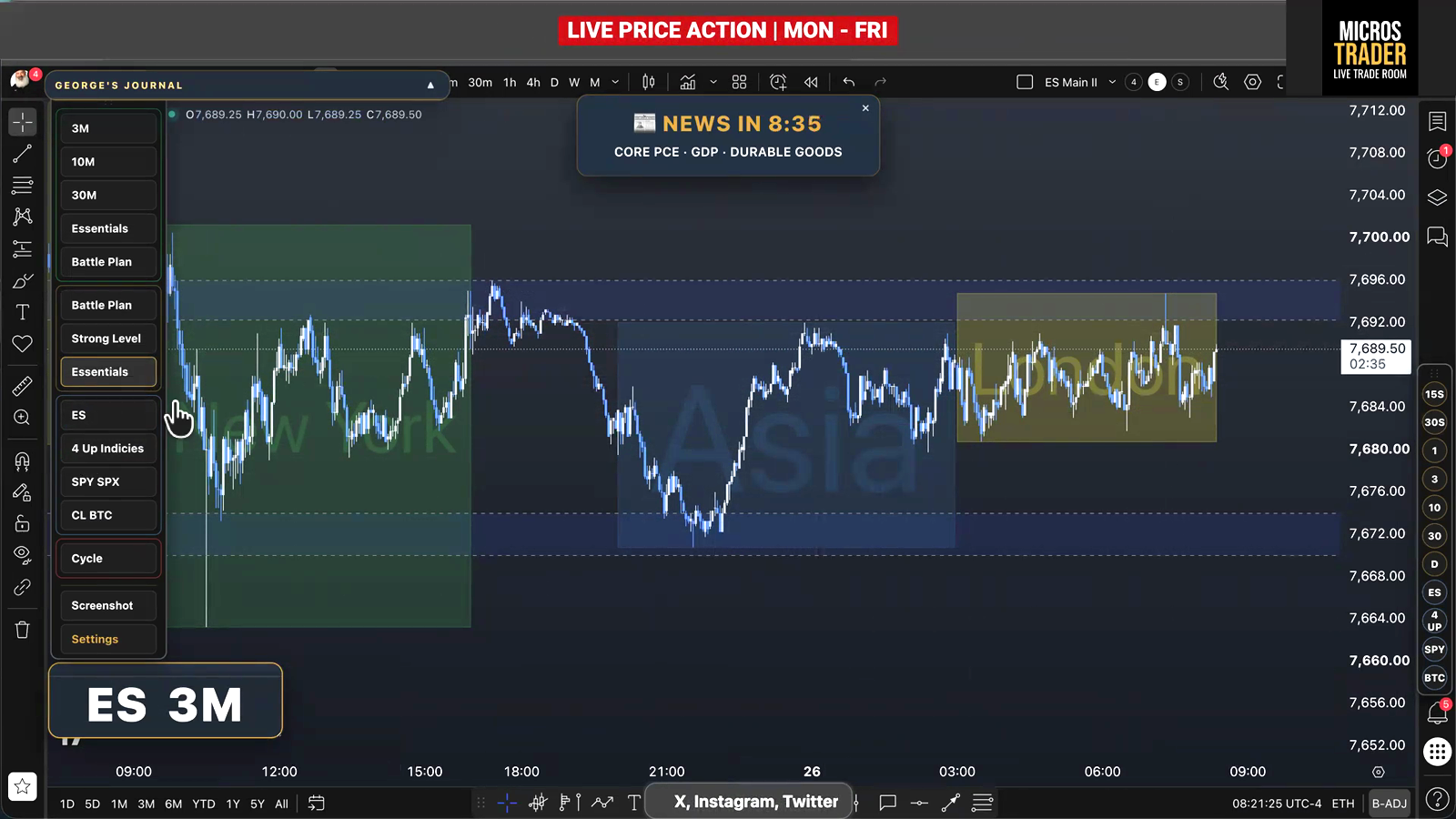
Look at the payoff. Monday, the entries came off those levels beautifully. Overnight, beautiful again. Yesterday the live long came out of the value area low bounce, right where the three marked levels lined up, even through the tariff headlines. When your key levels are drawn in advance, training your read becomes a matter of asking one question: where did we bounce, and why?
Trader Lesson 4
Mark your most important levels before the week starts and keep them on the chart. Pre-drawn Strong Levels turn a chaotic tape into a mapped board… you react to a plan instead of to noise.
THE STOP HE SHOULD HAVE HONORED
George was long earlier and it came back and got him out… then went not much further before it would have worked. He owned the miss. The ideal stop for that trade lived under the strong range, because that structure was likely to defend price. He just could not sit through it, so he took himself out early.
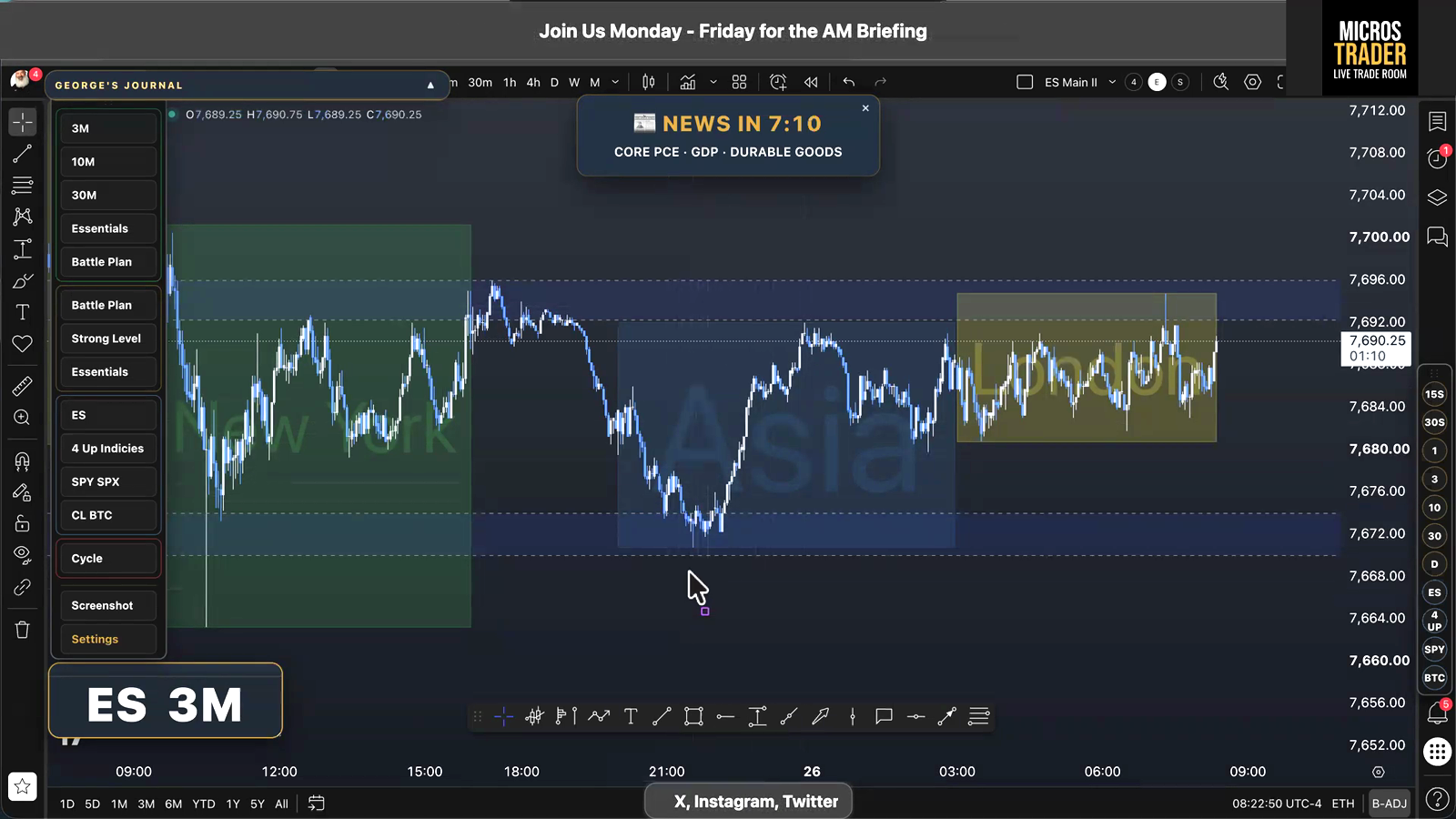
His rule on stops is worth copying. On a bigger trade, a 40 or 50 pointer, he has no problem keeping the stop under the strong range and letting the level do its job. The mistake is not the loss… it is abandoning the plan before the level gets its chance.
Into today he is FLAT and not enthused about chasing a long right up here. Without some kind of pullback he is not sure on the chase, but a nice tight stop on a clean breakout move would get him interested. Above roughly the 7728 area, a first attempt probably does not break clean… expect a rotation back in before any real push.
Trader Lesson 5
Put your stop where the structure defends, then let it work. The costly error is jumping out early because you can't sit still… trust the level you chose or don't take the trade.
THIS WEEK'S CALENDAR
The week is stacked with catalysts, and the compression is the market waiting on them. PCE landed today at the bottom of the hour… the number one indicator the Fed uses to set interest rates. It rarely moves the tape much, which is the strange part, but you respect it into the print and stay FLAT until it clears.
| Day | Event | Significance |
|---|---|---|
| Wednesday | Core PCE | The Fed's top inflation gauge for rate decisions. Usually a muted reaction, still respect the print. |
| Friday | Warsh speech | A Fed voice on the tape to close the week… a potential volatility driver. |
One housekeeping note for members: the Essentials indicator was updated today (version 6.5) with more slots on the watch list. Update it when you get a chance.
"To go long from here is really difficult… because this is the fairest price. Kind of means you're predicting breakouts."
COMMON QUESTIONS FOR ES FUTURES TRADERS
Why is it hard to go long from the POC?
A: The Point of Control is the highest-volume price in a profile, the fairest price both sides agree on. It acts like a magnet with a gravitational pull, so price tends to return to it. Buying there gives you no location edge… you are effectively betting on a breakout away from value rather than trading a defended level.
What is a Point of Control (POC) in volume profile?
A: The POC is the price level with the most traded volume over a given period or profile. It marks where the most business got done, which is why it often behaves as a balance point that price rotates back toward during a slow, ranging tape.
What does it mean to treat a Battle Plan entry lightly?
A: It means sizing small and using the level as an add-on location rather than your initial entry. On this ES micro futures trade plan, Battle Plan 3️⃣ was a continuation long off the strong range… a legit trade, but a place to press an already-working position, not where you commit full size for the first time.
What is the difference between an initial entry and an add-on location?
A: An initial entry is where you take first risk on a fresh idea, at a spot with a clear edge. An add-on location is where you scale into a position that is already going your way. Add-ons deserve lighter size because they extend risk on an open trade rather than defining it.
Why does the market compress into inside days before news?
A: Traders hold back size ahead of a catalyst like PCE, so range contracts and price stays inside the prior day's boundaries. Four inside days in a row bottles up energy… the eventual break out of that range can be sharp once the news clears and participants commit.
Where should I put my stop on a strong range trade?
A: The ideal stop sits under the strong range, because that structure is likely to defend price. On a larger move you keep the stop there and let the level do its work. The common mistake is exiting early out of discomfort, before the level ever gets its chance to hold.
What are Strong Levels and why mark them before the week?
A: Strong Levels are the price zones a trader judges most important for the week ahead, drawn in advance and kept on the chart, often via an indicator. Pre-marking them turns a noisy tape into a mapped board so you can read where price bounced and why, instead of reacting blind.
Why stay flat into a PCE release?
A: PCE is the Fed's primary inflation gauge, and while it often produces a muted reaction, the risk of a whippy print is not worth forcing a trade. Staying FLAT into the number protects your capital and your mindset, letting you enter clean once the reaction resolves.
Should I chase a breakout to new highs on the first attempt?
A: A first push into an untested level, like the 7728 area here, often fails to break clean and rotates back in before any real move. Rather than chase, wait for a pullback or a tight-stop breakout entry so your risk is defined and small if it rejects.
LIVE
SESSIONS
📅 Upcoming This Week
Hit the bell — every AM Briefing and live trading session this week is already scheduled on YouTube:
- Thursday, Thu Aug 27: AM Briefing · Live Stream
- Friday, Fri Aug 28: AM Briefing · Live Stream
Helping Futures Traders Via Our Core Strategy Academy Training Program and Futures Trading Group – The Best Emini Group IMHO.
📍 Originally published on MicrosTrader.com
Follow MicrosTrader
▶ YouTubeFacebook𝕏 TwitterMediumSubstack🎧 Apple Podcasts🎧 Spotify🎧 Amazon MusicLinkedIn


Comments
Post a Comment